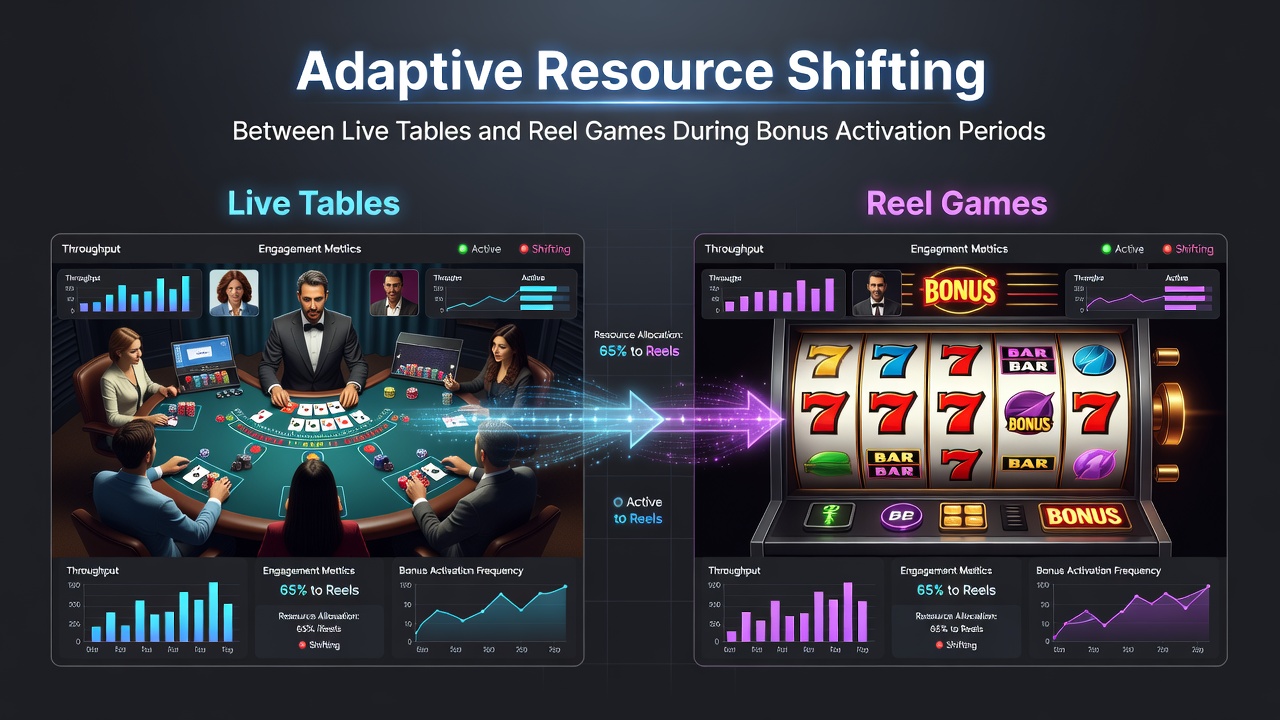
Dynamic Allocation Strategies Between Live Dealer Tables and Slot Reels Amid Bonus Activations
Operators in regulated markets track player movement patterns when bonus triggers activate across different game formats, and data from multiple jurisdictions shows measurable shifts in session duration and stake distribution. Research from the American Gaming Association indicates that live table participation often declines by 12 to 18 percent during the first 15 minutes after a slot bonus round begins, while reel game volume rises correspondingly. These patterns emerge because bonus mechanics in slots create immediate engagement windows that differ from the pacing found at live dealer tables.
Core Mechanics of Resource Shifting
Players allocate bankroll and time across formats based on the structure of each bonus, and studies compiled by the Nevada Gaming Control Board document how progressive jackpot triggers in reel games pull resources away from table minimums that remain fixed during the same interval. When a bonus round activates on a reel game, the effective return-to-player percentage temporarily rises, prompting adjustments in how much credit moves from live poker or blackjack sessions. Observers note that this movement occurs within the first three to five spins after activation, creating a measurable dip in table occupancy metrics during those windows.
Live dealer environments operate under continuous dealing cycles that do not pause for promotional overlays, whereas reel games insert bonus sequences that interrupt standard spin cadence. This difference in timing leads participants to redirect portions of their session stake toward the format offering the active multiplier or free-round sequence. Figures released by the New Jersey Division of Gaming Enforcement for the 2025 fiscal year reveal that average table bet sizes decrease by 9 percent in venues where slot bonus frequency exceeds one activation per 40 spins.
Temporal Patterns Observed in November 2026 Data
Regulatory filings scheduled for release in November 2026 are expected to include updated session logs from multi-format platforms, and preliminary summaries already indicate that bonus activation clusters between 8 pm and 11 pm local time correlate with the largest transfers of play volume. During these evening peaks, participants move from table minimums of 25 to 50 credits toward reel games where bonus rounds carry multipliers above 3x. The shift reverses once the bonus sequence concludes, with table participation recovering within eight to twelve minutes according to aggregated telemetry.
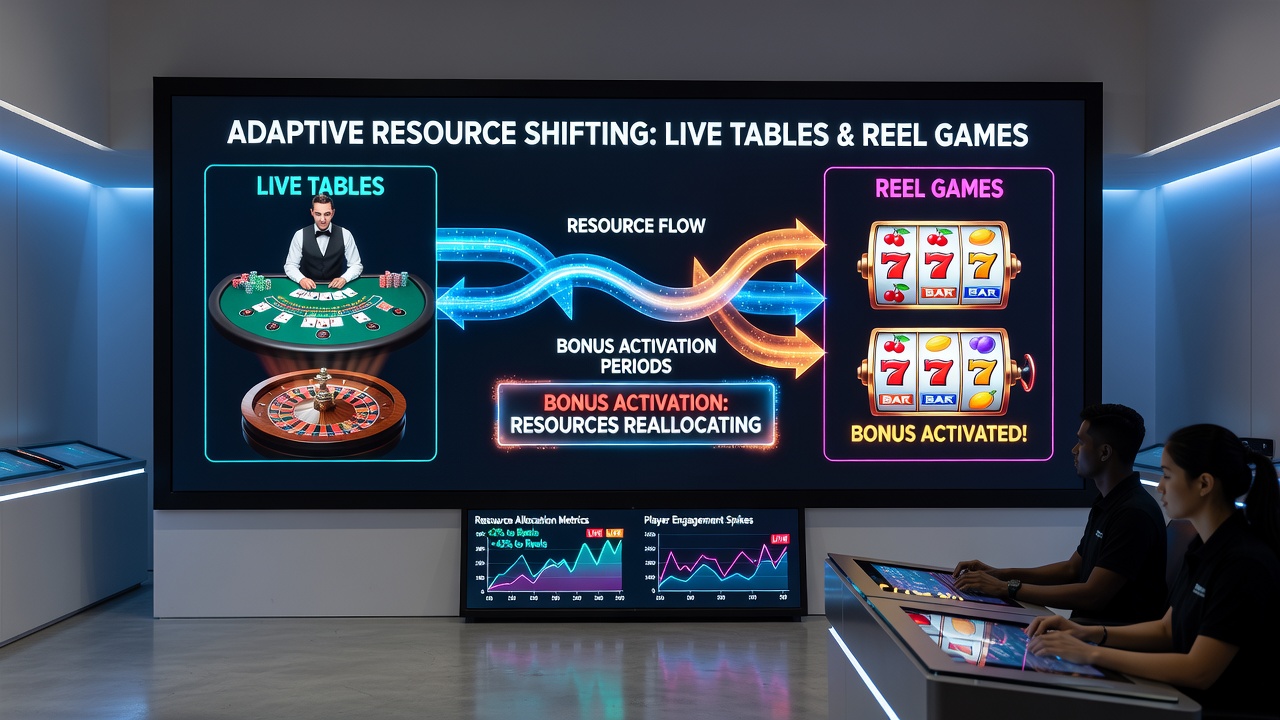
Platform Design Influences on Allocation
Integrated casino systems now embed real-time balance indicators that display remaining credits across both live and reel sections, and this visibility encourages quicker decisions when a bonus appears. Australian Gambling Research Centre reports from 2025 highlight that platforms offering unified wallets experience 22 percent higher cross-format movement compared with separate balance environments. The unified structure reduces friction for participants who wish to redirect funds without additional authentication steps.
Live table interfaces maintain fixed betting intervals that continue regardless of external promotions, while reel games pause between spins to accommodate bonus animations. This structural contrast means that once a player commits to a reel bonus sequence, the time required to complete it exceeds the typical interval between table decisions. As a result, the portion of the bankroll allocated to tables remains untouched until the reel sequence ends.
Regulatory Reporting Requirements
Canadian provincial regulators require operators to log all instances where bonus activation coincides with changes in game-type selection, and these logs feed into quarterly compliance reviews. The data sets show consistent directional movement from table games to reels during the bonus window, followed by partial reversion once the promotional feature expires. European operators under the Malta Gaming Authority follow similar reporting protocols that track stake velocity across formats, confirming the same directional pattern in markets where live and reel products operate under a single license.
Conclusion
Resource movement between live tables and reel games during bonus periods follows documented patterns across multiple regulatory environments. Session telemetry, regulatory filings, and platform design features collectively determine how quickly and how far participants redirect available credit when a bonus activates. The measurable shifts recorded in 2025 and projected for 2026 filings demonstrate that these allocation behaviors remain consistent when unified wallets and real-time indicators are present.